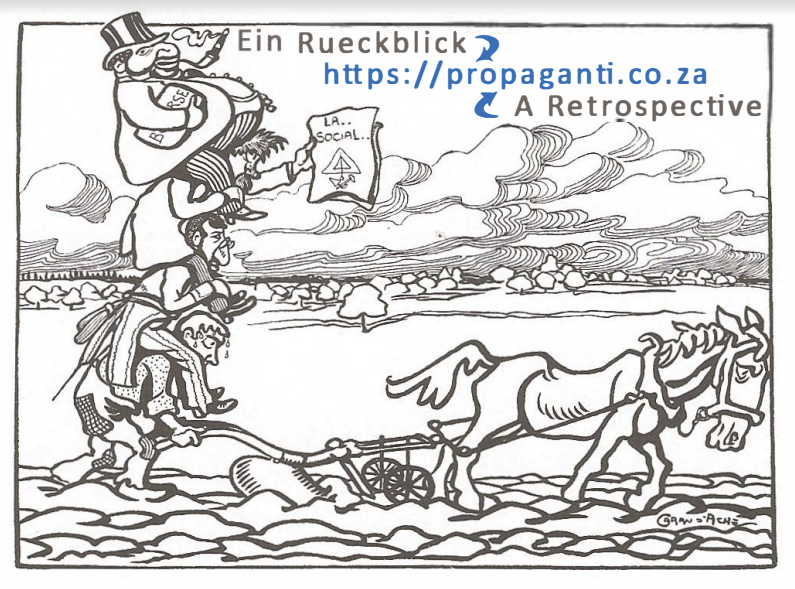


All of this did not take place in a mentally demented fever dream, or in sleepwalking mode, but all the leading participants were fully aware of what was going on and realized that incriminating documents urgently needed to be secured. Gerry Docherty and Jim Macgregor have described this process in their book Hidden History in the final chapter, Conclusion: Lies, Fairy Tales and Stolen History. Here follows a very brief summary.
“The message was clear: ‘Blame Germany.’ We believe that modern historiography of the First World War should be consumed with caution, especially when it comes from Oxford, the spiritual headquarters of the Secret Elite. Throughout Great Britain, diaries and memoirs were censored and altered, evidence sifted through, removed, burned, carefully ‘selected’ and falsified. That is bad enough, but nothing compared to the outrageous theft of historical documents committed by the secret elite across Europe. Immediately after the end of the war, hundreds of thousands of important documents on the origins of World War I were removed from their countries of origin, taken to the west coast of America, and stashed away in vaults at Stanford University. Undoubtedly, these documents would have revealed the real culprits, so they had to be moved to a safe place and stored away from overly curious eyes.” (Hidden History.)
Reliable people, such as Herbert Hoover, for example, were given the task. A former Rothschild employee who had thoroughly ruined his reputation in Australia, China and South Africa in his reckless dealings as a mining expert. Here the opportunity arose, to rehabilitate himself as a philanthropist, “literature lover” and later even as president of the USA. It is astonishing how such people always manage to cross the finishing line with a snow-white vest, provided that they have joined the right party.
Herbert Hoover wasted no time, supported by at least 1000 people and selected “specialists” – among others, the Belgian Emile Francqui, who had already gained the necessary experience as an officer in the Congo, under King Leopold. In order to give the raid a respectable appearance, the history professor, Ephraim Adams, was roped in. This troupe set out to harvest what they could lay their sticky fingers on. In Germany, (15 wagonloads from the Supreme Army Leadership, 6000 volumes from the Imperial Court), in St. Petersburg, (25 wagonloads purchased from a watchman for 200 dollars,) in Finland, (A barn full of documents of the Tsar), to name but a few examples. Access to Russian archives was easy, as the Bolsheviks were still busy with their own internal challenges. The exploits of the raids were protected from prying eyes in the vaults of Stanford University. Today, this gigantic collection of captured documents has been given the respectful name Hoover Institution on War, Revolution and Peace.
The victorious powers themselves disinfected their own archives. Evidence intended to prove their own desire for peace before the war were falsified and brought to the fore. In many cases, there were no incriminating protocols which proved the opposite. Our power-hungry friends had carefully avoided written documents. The Secret Elite, also known as the Milner Group, or Rhodes Group, whose members were almost exclusively products of the three Oxford colleges, Balliol, New College and All Souls, launched a concentrated propaganda campaign like the world had never seen before.
Following Winston Churchill’s motto, “History will judge me mildly, I intend to write it,” a flood of stories and memoirs on the origins of the First World War was published, led by well-known politicians such as Sir Edward Grey and David Lloyd George. George Buchanan was forced to delete certain passages from his memoirs, otherwise he would have been stripped of his pension. Through the Northcliffe press and thanks to the effective storywriters at Oxford University, the sector was dominated. The influence of the Rhodes disciples was also noticeable in the USA. History professor Bernadotte Schmitt published The Coming of War: 1914. As might be expected, he was awarded the Pulitzer Prize and the George Louis Beer Prize. The fact that he himself was a Rhodes Scholar and Beer a Rhodes follower was surely only a coincidence.
In Germany one could enjoy the products of the usual free-loaders. Professors Fischer (Hamburg) and Pogge von Strandmann (Hamburg and Oxford) still have an influence today, although their theses have long since been refuted. The group also controlled the Dictionary of National Biography, so they were able to write the biographies of their own members. The written records of Alfred Milner, King Edward, Lord Nathaniel Rothschild and others were carefully filtered or destroyed to cover their tracks. The term – fake news had not been coined, but would be 100 percent applicable here.