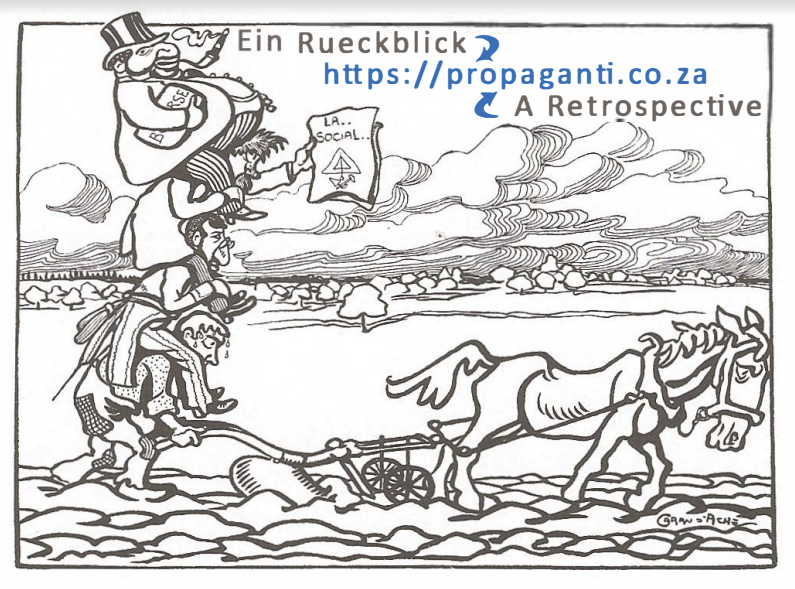


William Mc Kinley 1897- 1901, started the war with Spain and attacked Cuba, Puerto Rico and the Philippines. The inspiration came to him during prayers. The newspaper magnate William Randolph Hearst boasted at the time, “I invented the war with Spain”. He has not claimed responsibility for the mass murders in the Philippines though.
Theodore Roosevelt 1901-1909, whom Henry Adams called “our Dutch-American Napoleon”. He organized the “rebellion” in Colombia that led to the emergence of the “free” state of Panama, and during his tenure a new asterisk was placed on the U.S. flag, – Hawaii. “No peaceful achievement can be measured against the splendour of war,” was one of his leitmotifs. Awarded the Nobel Peace Prize, it goes without saying, never underestimate the black humour of the Scandinavians.
Woodrow Wilson 1913-1921, tore up the Monroe doctrine and invaded Mexico and Haiti. Whether he was the peace-loving egghead, that he is claimed to be, is questionable. (Compare his 1917, Committee on Public Information, CPI. A gigantic fake-news factory like the world hadn’t seen before. 1920, Palmer raids to silence critical voices who refused to swallow the CPI propaganda) General Smedley Butler, commander-in-chief of the U.S. Navy at the time, and an early whistle-blower said, “Al Capone had at best three districts under control, I operated on three continents”. (The American Presidency. Gore Vidal.)
“By the way, the fiercest opposition to the mandate plans came from the South African government, which saw South-West Africa as a welcome and resource-rich rounding off of its own territory and wanted it fully integrated… The very extensive (C-mandate) trust was granted to South Africa for South-West Africa and they were satisfied with it – even if the tacit hope that the world would ‘forget’ the mandate status of South-West Africa, was never fulfilled.”
“The main victims of the collapse of the German colonial empire, alongside the shareholders of the large trading companies, were the settlers who had built up their livelihoods there: in Togo, Cameroon and East Africa, almost all German farmers and plantation owners were expropriated and expelled. In South-West Africa, a similar approach would have meant the depopulation of the country and the collapse of the white infrastructure.
Although 6 000 of the 15,000 Germans were expelled in 1919, a policy reversal of integration soon began within the South African government: returning and new settlers were willingly accepted.” (Black-White-Red in Africa. The German colonies 1883 -1918. Wolfgang Mayer/Franz Metzger/J.R.Wilhelmi.)
How did the Rust family in South-West Africa fare during these years? They were lucky not to be deported, and in December 1919 Gerda Rust and son Joachim had the opportunity to travel back home on a cargo steamer. In their luggage, many books that were meant to complement the library already existing in Ondekaremba; Among them was the book, Reineke Fuchs, by J.W.v.Goethe, of 1846.