

Let us return to the northern hemisphere, which is the hot spot for most of the world’s violent conflicts.
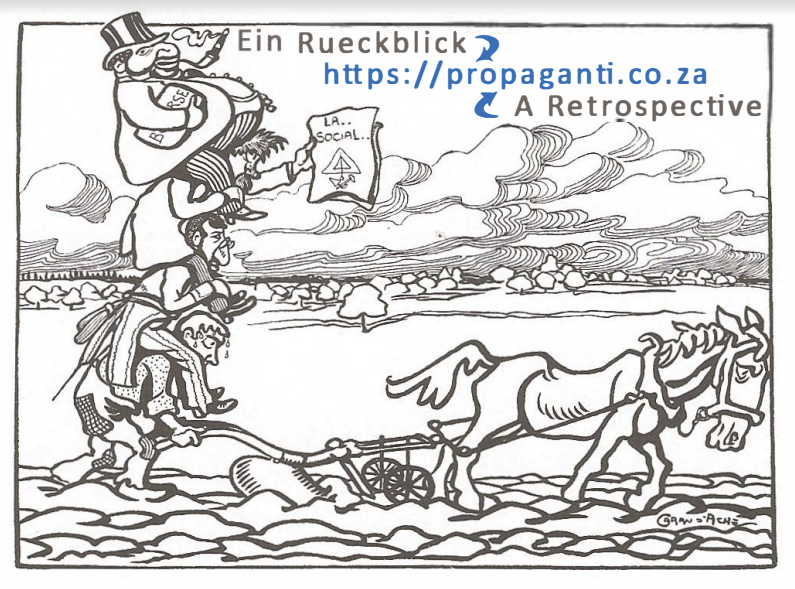
And not, as we are always led to believe, inspired by the people and nations, but by a small group of greedy, power-hungry control freaks, who have long stretched their tentacles over the entire globe. Let’s start in Russia, where Leo Tolstoy (1828-1910) recorded his opinion on these power-obsessed people.
“The subordination of a whole people to a few people could still be justified if the rulers were the best people; but that is not the case and it can never be. Often the worst and most insignificant, cruel, most immoral and especially the most mendacious people rule. And it is no coincidence that this is the case. “
He wrote this at a time when the Russian Revolution was still in preparation (1905) and one can assume that he also knew that these pathetic candidates are almost always manoeuvred into position by powerful backers, operating behind the screens.
Even the Tsar was “looked after” by the appropriate people to ensure that the war of 1914-1918 could be started.
The new strong man after the revolution was called Vladimir Lenin (previously Ulyanov) 1870-1924. In 1917 he returned from exile in Switzerland to seize power with help from circles in the West. He survived the internal power struggles between competing factions in the communist movement and founded the Comintern (Communist International) in 1919, in order to exert his influence on revolutionary movements in 29 countries.
We know that the first world war brought the Christian Tsarist empire as well as the Muslim Ottoman empire to their knees and ended the legendary Russian – Turkish enmity. As if the new rulers had the urgent need to reaffirm Leo Tolstoy’s assessment, they signed a friendship treaty. It was a friendship of convenience called the Moscow Treaty.
The Bolsheviks wanted to expand their new empire, the Young Turks wanted to save what was left of the old Ottoman Empire.
After the Ottomans carried out a genocide against the Armenians in 1915-17, with an estimated 1-1.2 million victims, the Young Turks expanded eastwards and attacked Armenia again. In consultation with the Georgian Josef Stalin, borders were arbitrarily moved in order to satisfy their own needs. Newly founded states – Georgia, Armenia and Azerbaijan – became Soviet republics, the Nagorno-Karabakh area is still the scene of unrest in 2021.
Kemal Ataturk, the new strong man in Turkey was a nationalist, a secularist and modernized the education system as well as the public administration. He relegated religion to where it belongs, into the private sphere and the houses of prayer. Unfortunately there is nothing left of that these days.
Since the terms socialism and communism were not yet clearly distinguished in the nineteenth century, the difference has been defined in the “Communist Manifesto” (written in 1847, on behalf of the League of Communists, Brussels, London, Paris, by Karl Marx and Friedrich Engels) : “Communism is the terminal stage of economic – social development brought about by the dictatorship of the proletariat“. Unfortunately, we know from experience that the term “terminal stage” mostly does not bode well.
After Lenin’s stroke, a power struggle broke out between Leo Trotsky (alias – Leib Bronstein 1878 – 1940 – who had returned to Russia in 1917 with the support of his US-based comrades, armed with a US passport and 30 million dollars) and Josef Stalin (1879 – 1953) . Trotsky was defeated and was neutralized in exile. The extremely cunning Josef Stalin was now able to expand his brutal reign of terror almost unchecked. The first Gulag labour camp, Slovetsky, was established in 1923. Over the years the Gulag system comprised approximately 30,000 facilities and an estimated 20 million inmates were channelled through the system. “The Tsarist jailers were harmless beginners.” [Compared to the Gulag jailers]. You can read more about these atrocities in The Archipelago Gulag by Alexander Solzhenitsyn,
“Under Josef Stalin, communism became a world revolutionary tool of Moscow’s foreign policy, communist parties abroad were strictly dependent of the headquarters … From this worldly belief in the future of the socialist-communist utopia, the right to use terror, to destroy human life, led to the demand for greatest sacrifice, derived from an appeal to idealism, ‘heroism’, activism and the renunciation and self-humiliation of the individual… …destruction as creative lust, ”was one of the countless slogans that spooked through activist minds. “The liberation of man from the inherited ties in church, family, race, nationality and national tradition as well as the old economic systems,“ was the goal of these ideologues. (Der Grosse Brockhaus.)