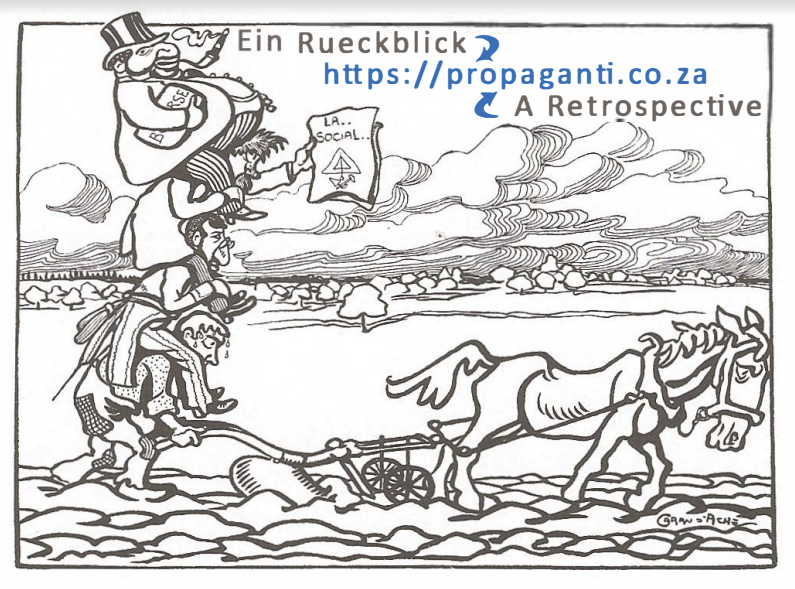


Territorial losses and reparations. Partial listing.
Eupen and Malmedy, after a fraudulent “plebiscite”, to Belgium. Alsace-Lorraine without a vote to France. Poznan and West Prussia to Poland. Hutschiner county to Czechoslovakia. The newly formed Republic “German-Austria” was forbidden to ever be re-united with Germany. All colonies to the League of Nations, for distribution in the form of mandates. 70 579 square kilometres with 7.3 million inhabitants were separated from the old Reich. Germany lost 75% of its annual zinc and iron ore production, 28% of its coal, 25% of its potato/rye/barley and wheat harvests. The large rivers and the Kiel canal were internationalized. Almost the entire merchant fleet and the overseas cables were confiscated. The German forests were plundered, as they were again 25 years later, which led to the ailing state of forests these days. The resurgence of the German economic power was to be prevented, and in order to give the miserable activity a half-respectable coating, the German parliament and the emperor were vilified, “due to the most serious violation of international moral laws and the sanctity of treaties” as “war criminals”. At the same time, as already mentioned, a merciless propaganda campaign began, though not as sophisticated as in later years.
In Austria, things looked just as dark. Here, too, the acceptance of the peace dictates and the responsibility for war crimes was imposed unilaterally. Threatening Marxist propaganda by the aforementioned professional revolutionaries, caused mental and moral depression, nourished the re-unification sentiments, which were suppressed by England, France and Italy. The country had to accept the loss of huge chunks of land alongside their borders. Unemployment was rampant, and financial collapse was imminent.

“The Treaty of Versailles and the other Paris Treaties, not the First World War, were the real primordial catastrophe of the 20th century.” ( Historian Peter Hoeres. Die Welt. History. 04.07.2019.
Due to the outrageously high demands for reparations, Germany had to default. That was probably the way it was intended. The renowned lawyer, Professor, Friedrich Grimm has clearly recognized this.
“The Ruhr Struggle: Right against Power.”
“But in 1917, after the entry of North America into the war and the Allies had gained the upper hand, those forces emerged in France who thought that the time had come to resume France’s traditional policy – the policy of Richelieu, Marazin, Louis XIV, Napoleon I, and III, the traditional politics, the aim of which was bluntly described by its modern spokesman Maurice Barres with his famous formula: ‘We need the German chaos.’ The so-called peace of Versailles was concluded under this aspect, but this ‘war after the war’ became a Franco-German conflict. Already in the months of the armistice 1918-19 there were the first French efforts to separate the Saar region and the Rhineland, followed by the final push for the border along the Rhine. The highlight ‘over these classical efforts for the Rhine border’, was the desire of powerful French industrial circles to bring the Ruhr area, with its immense economic importance, under French control.
Raymond Poincaré, French President of the pre-war and war period, had returned to the centre of French politics as Prime Minister in January 1922. With regard to the role he had played before 1914, he had been called ‘Poincaré -la-guerre’, now he had the ambition to become – Poincaré -la-Ruhr’. Just a few days after he came to power on 19 September, he developed his program. On 1 January 1922 he initiated it thus: the purposeful, not unwise policy of George Clemenceau, who wanted to enforce the Rhine border in the long run using the Treaty of Versailles, was pushed back by a frantic economic imperialism. and the capture of so-called ‘productive pawns‘. It was hoped that this would lead to faster progress and to achieve better results.
When it turned out that England was not prepared to follow France on this route, he proclaimed France’s sole claim to ‘productive pawns’ and invaded the Ruhr area.”
Why England did not participate is clear. It surely wanted to prevent France from becoming too strong? The German response to the threat was to let endlessly long freight trains roll towards France. Huge quantities of coke, wood and what the German economy could throw in were carted to the border as reparation. It didn’t help, a vexatious pretext was invented, and as Grimm reports.
“This pretext was enough for the French Prime Minister. On the 10th of January 1923, Poincaré had a note handed over to the Reich government. It was announced that on 11 January French and Belgian troops would occupy the entire Ruhr area. These troops were accompanied by a so-called Engineering Commission, which had to take over the control and exploitation of the Ruhr coal basin on account of France for reparations .” ( Friedrich Grimm. With an Open Visor.)
The brutal actions of the troops; 13 deaths at the Krupp works in Essen, the execution of resistance fighter Albert Schlageter as an ‘example’, combined with passive resistance, gradually pushed the occupiers into moral isolation. The twofold attempt to get separatist movements in the Rhineland and the Palatinate, organized by Foch and Poincaré, in 1919 and 1923, failed miserably. One of the initiates in German ranks, Konrad Adenauer, initially sympathized with the separatists, and in 1919 joined the Pro Palestine Committee to promote the Zionist colonial project in Palestine. Only the London Conference of August 1924 led to the French withdrawal from the Ruhr area and the release of the rebels.
“The traditional politics of France”, which was mentioned above, refers to the habit of the leading elites in France, whether monarchist or republican, to invade Germany at irregular intervals and to help themselves. After all, they had become fond of the policy of fragmentation, which they had been zealously stoking in Germany for centuries. “That’s not true,” some will now say. To understand this, we need to take another short journey into the past. Joachim Fernau had the gift of conveying unadulterated history to us in an open and humorous way. He had mastered the art better than many who call themselves historians.