

In 1940 the time had finally arrived and with a deposit of 1750 pounds Martin and Marga were able to secure the farm Okatjetswambo, 80 km from the town of Okahandja. To make the down payment, the relatively reliable pickup had to be sold for £ 300 and replaced with an old rickety 1928 Chevrolet.
Shortly before, father Erich had contributed 100 young heifers as the final settlement. So the development of
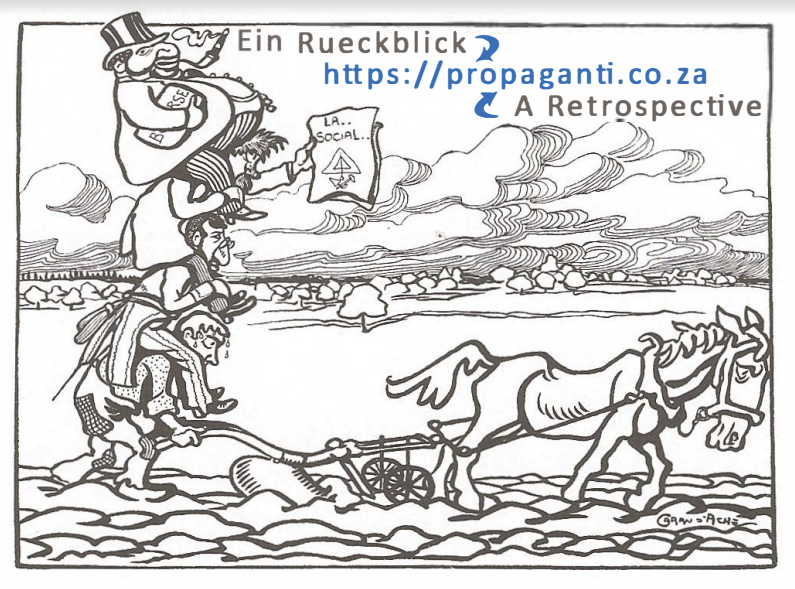
the farm and the future of the small family could begin. In the meantime there were two daughters, born in 1938 (Urda) and 1939 (Almuth). The population in Southwest Africa was relatively untouched by the war events in Europe up to this point, but things soon turned sour. The “subjects” of the British Empire and the French Empire all over the world felt obliged to participate in the madness, spurred on by the incessant propaganda that was drummed into them. From New Zealand, Australia, South Africa, Morocco, India, Mongolia and many other places, they came along to attack the “Huns”.
The family had barely settled in on the farm when Martin, like many German residents of the country, was collected and transported to a concentration camp in South Africa. He was busy digging a well with his labourers and had reached a depth of 8 meters when the police picked him up. On the same day the trip went by police car to Okahandja and from there by train to South Africa. Martin’s daughters, who had been waiting in the old Chevvy full of anticipation, were deeply disappointed.
Many men were subjected to a 6-year concentration camp stay. Many of them, as a result of being denounced by neighbours who had hoped to lay their hands on the possessions of these desperate people. “No one in any society is more detestable than the snitch” was confirmed once again. (The narrow-minded opportunistic informer should not be confused with “whistle-blowers” like Julian Assange or Edward Snowden, who make state-sponsored atrocities known to the public.) So now Marga was challenged, without the necessary experience and training, to keep this remote farming operations going. The next notable town, Okahandja, was 80 km away, and it turned out that the German owners of a neighbouring farm were trying to ruin Marga’s livelihood. Bones dipped in Arsenic (locust poison) were distributed in the veld, whereupon the cattle chewed on them to make up for the phosphate deficiency in the pasture, and then promptly died. Marga Rust had a tough battle to endure and in the end managed to save the farm from ruin. Another neighbour, Mr T., was also arrested on the same day (possibly also smeared by whoever), and so two women, both with small children, found themselves in a seemingly hopeless situation without having been able to prepare themselves in any way for this madness. Ms. T. had four small children to look after, and because of the lack of petrol, a donkey cart was the only means of transport for both women. Ms. T. soon died of an injury sustained when she caught a new settler from South Africa poaching on her farm. It was a real challenge for women left alone in the South West African bush to keep their belongings together. Martin Rust reported about this time in the book: – Ondekaremba. Farm life in South West Africa. He also reports a little about his time in the concentration camp. “Various small books have been written about the detention centres. Almost only of a humorous nature, the serious and tragic sides have mostly been ignored. ”
There we have it again, the refreshing difference between moderate reporting of the events and the excessively exaggerated, one sided narratives that are so popular these days.